
Health
Learn how to help a WF mom fighting a brain tumor and other ways to Lend A Hand Up
By Tommy Anderson
Advertisement · Why this ad?
Mark Gilliam brings a decade of experience in business reporting to Fargo Current, previously writing for the Grand Forks Herald. He holds a degree in Business Administration from the University of North Dakota and specializes in local economic trends and business development.
More from Mark →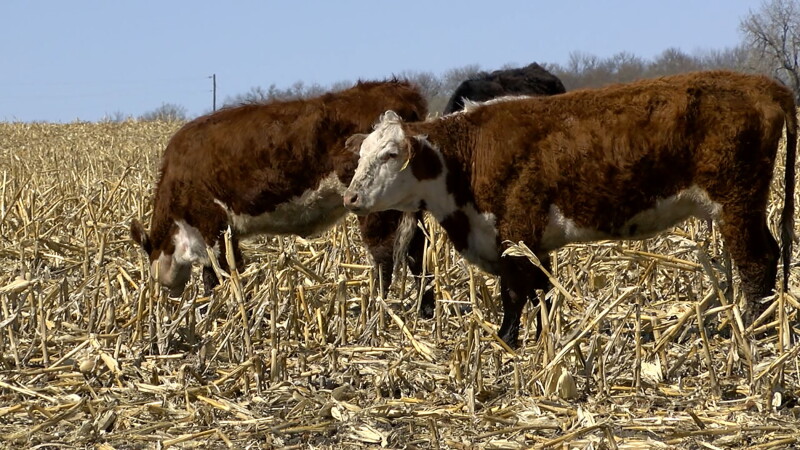
Trevor Peterson / Agweek file photo By Ariana Schumacher Today at 5:30 AM Listen Comments Share Share this article News Reporting News Reporting Based on facts, either observed and verified firsthand by the reporter, or reported and verified from knowledgeable sources. The Trust Project What is this? BROOKINGS, S.D. — Volunteer corn is not something most people want, but there may be a simple solution to the problem. Volunteer corn is typically caused by leftover corn grain in a field that germinates and creates unwanted plants. But livestock can be a great way to combat the problem. ADVERTISEMENT “Because they are selective grazers and they are going to go after that corn grain and those husks and leaves first,” said Kim Ricardo, forage field specialist with South Dakota State University Extension. Contributed / SDSU Not only can it help reduce the potential for the amount of volunteer corn in subsequent crops, but it also has potential to reduce the amount of herbicide ito manage the volunteer corn crop. Ricardo said volunteer corn increases following dry years. “And that’s really because drought stress is going to weaken plants. It doesn’t really matter what kind of plant we’re talking about. And in the case of corn, that drought stress tends to increase the incidence of lodged ears or dropped ears. So, of course, those ears are going to be left in the field and then that corn grain is going to be sitting out there and, again, potentially lead to some germination of corn plants in the following crops,” Ricardo said. Along with managing that volunteer crop, it also provides an alternative feed option. This is beneficial as feed costs continue to increase. ADVERTISEMENT “Grazing corn residue is a really useful feed resource for livestock producers, even just beyond the thought of volunteer corn. It can be a really great way to extend grazing days. So, there’s that potential with it, but then also those extended grazing days kind of allow us to maybe preserve our harvested feed inventory that might be limited or stretched following a dry period,” Ricardo said. “So it can be just a really good, useful, tool to try to maximize the amount of feed and forage you have available to your livestock.” Having livestock on a harvested crop field can also be good for soil health. More corn news: The grain is in the bin. Now what? 3d ago North Dakota bucks fertilizer trend, study says Oct 26 University of Minnesota cuts manure nitrogen rates for corn Oct 26 “Livestock are a really great source of added nutrients and soil nutrient cycling into these crop fields,” Ricardo said. Sometimes, producers are concerned about the soil compaction of having livestock on the crop fields, but Ricardo said several research studies have shown that grazing corn residue doesn’t cause much in the way of compaction issues. “As long as, you know, not turning cattle out onto those fields when it’s super wet or after fields have thawed following a freeze,” Ricardo said. ADVERTISEMENT She said sometimes grazing corn residue can potentially increase the yields of following crops, including soybeans. “That might not happen every year, but it is a thought, and I think kind of a test to that knowledge or idea that adding livestock to these fields can really help benefit nutrient cycling,” Ricardo said. Stocking rates for these residues will depend on the amount of acreage and residue available. “So really that’s just kind of an agreement that’s going to have to be made between the livestock producer and the farmer,” Ricardo said. Comments Share Share this article News Reporting News Reporting Based on facts, either observed and verified firsthand by the reporter, or reported and verified from knowledgeable sources. The Trust Project What is this? Tags Tags AGRICULTURE CATTLE LIVESTOCK CROPS AGRICULTURE RESEARCH By Ariana Schumacher Ariana is a reporter for Agweek based out of South Dakota. She graduated from South Dakota State University in 2022 with a double major in Agricultural Communications and Journalism, with a minor in Animal Science. She is currently a graduate student at SDSU, working towards her Masters of Mass Communications degree. She enjoys reporting on all things agriculture and sharing the stories that matter to both the producers and the consumers. Twitter Facebook Listen to this article Conversation ADVERTISEMENT What To Read Next Cattle Tips for transitioning calves to the feedlot 6d ago · By Ariana Schumacher Policy Judge strikes down parts of North Dakota Beef Commission membership law Oct 28 · By Jack Dura / North Dakota Monitor Cattle Free RFID tags again available for cattle and bison producers Oct 28 · By Michael Johnson ADVERTISEMENT Get Local
By Tommy Anderson

By Sofia Cheung

By Tommy Anderson

By Lila Johnson